
Tokyo: How to Find the Perfect Hotel in a Saturated Market
Discover how to navigate Tokyo's vast hotel market and find the ideal accommodation for your trip. Practical tips, search strategies, and how to get the best value for an unforgettable stay in the Japanese capital.
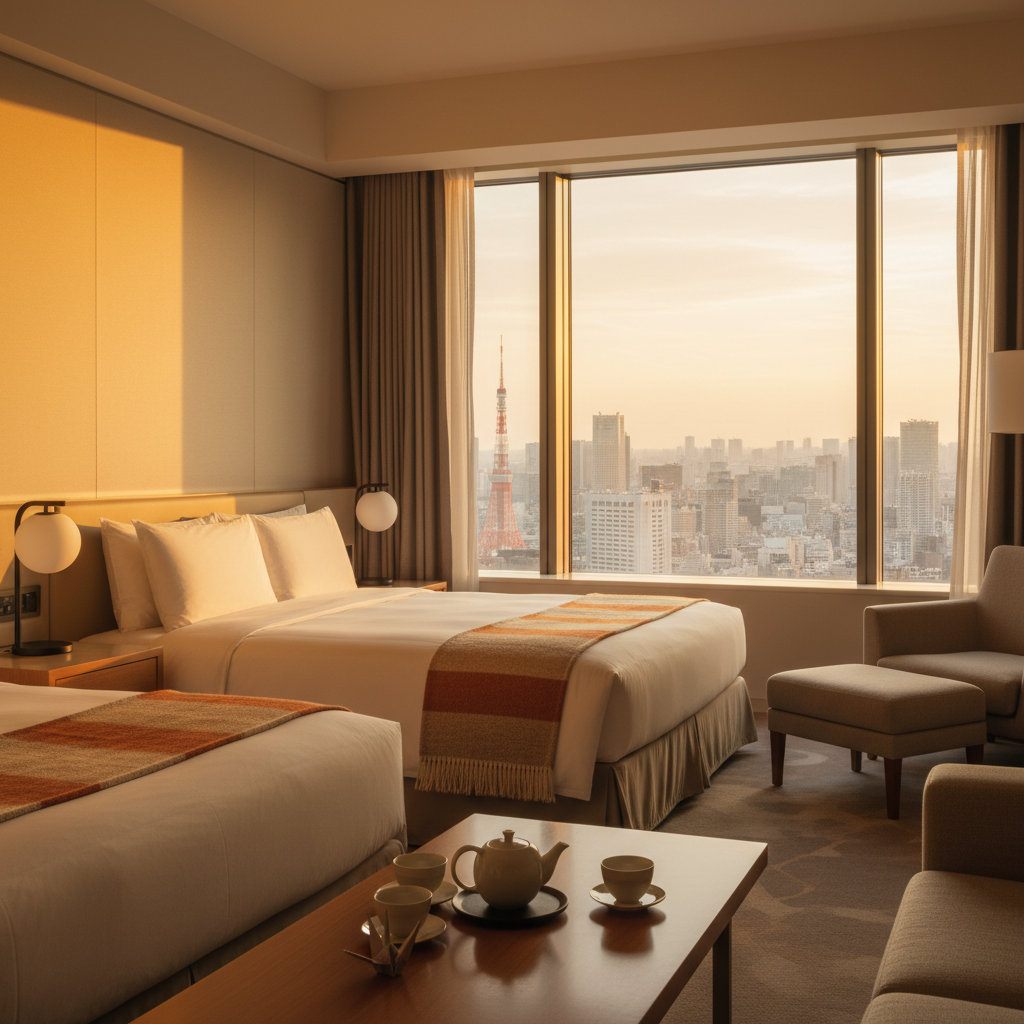
Tokyo: How to Find the Perfect Hotel in a Saturated Market
Tokyo is a vibrant and complex metropolis, offering an infinite variety of experiences and, consequently, an extremely saturated hotel market. Finding the ideal hotel might seem like a daunting task, but with the right strategies, it's possible to discover hidden gems and secure a memorable stay, whether for business or leisure, in one of the world's most fascinating cities. Resapass, with its 2 million bookable hotels worldwide, guides you through this urban jungle to ensure your search is not only fruitful but also pleasant and convenient.
This article is your compass for navigating Tokyo's hotel landscape. We'll provide expert advice on how to identify the district that best suits you, choose the ideal type of accommodation, and make the most of search tools to get the best value for money. Get ready to uncover the secrets to a perfect, stress-free, and surprise-free stay in the Japanese capital.
1. Getting to Know Tokyo: Districts and Vibe for Every Traveller
To find the perfect hotel in Tokyo, it's essential to understand the diversity of its districts, as each offers a unique experience. Your choice of area will largely determine the character of your trip, influencing proximity to attractions, culinary offerings, and nightlife.
Tokyo is a city of contrasts, where ancient tradition merges with futuristic modernity, and each district tells a different story. Taking the time to research the characteristics of each will help you narrow down your search and focus on the area that best suits your interests and travel style.
Shibuya: The Pulsating Heart of Fashion and Entertainment
Shibuya is Tokyo's iconic district, famous for the world's busiest pedestrian crossing and for being a hub of youth fashion, trends, and entertainment. It's ideal for those seeking vibrancy, shopping centres, nightlife, and easy access to most JR Yamanote lines.
If you're an energetic traveller who loves action, shopping, and nightlife, Shibuya will offer you an unforgettable experience. Hotels here range from international chains to more modern boutique hotels, but availability can be limited, and prices tend to be higher due to its popularity.
Shinjuku: Skyscrapers, Parks, and Illuminated Nightlife
Shinjuku is another central and dynamic area, famous for its impressive skyscrapers, including the Tokyo Metropolitan Government Building with free panoramic views, and the magnificent Shinjuku Gyoen National Garden. It's a crucial transport hub and offers a wide choice of restaurants and nightlife, including the eccentric bars of Golden Gai and the lively Kabukicho.
This district is perfect for those seeking a mix of urban modernity, shopping, evening entertainment, and easy access to public transport. Shinjuku offers a wide range of hotels, from luxurious 5-star options to more budget-friendly choices, making it suitable for different budgets and preferences.
Ginza: Luxury, Elegance, and High-End Shopping
Ginza is the luxury district par excellence, with high-fashion boutiques, exclusive department stores, Michelin-starred restaurants, and Kabuki theatres. It's a quieter, more sophisticated area, ideal for those seeking a high-quality shopping experience and refined cultural and culinary offerings.
Hotels in Ginza tend to be higher-end and more expensive, suitable for travellers with a larger budget who appreciate elegance and tranquillity. Its central location still allows for easy access to other areas of interest in the city.
Asakusa: Tradition and Historic Charm
Asakusa is the heart of old Tokyo, dominated by the majestic Senso-ji Temple, the city's oldest, and Nakamise-dori street, full of souvenir stalls and traditional food. Here, you'll find a more authentic and historic atmosphere, away from the modernist hustle and bustle of Shibuya or Shinjuku.
For those who wish to immerse themselves in traditional Japanese culture, Asakusa is the perfect choice. It offers a wide range of accommodation, from traditional ryokans to more modern hotels, often at more accessible prices compared to the more central and trendy areas, while still being well-connected by public transport.
2. Accommodation Types in Tokyo: Beyond the Standard Hotel
Tokyo doesn't just offer traditional hotels; its accommodation market is incredibly diverse, with unique options to suit every budget and preference. Exploring these alternatives can enrich your travel experience, offering a more authentic taste of local culture or simply a more practical and economical solution.
Considering different types of accommodation allows you to customise your stay, whether you're looking for luxury, tradition, or maximum spatial efficiency. The right choice can make the difference between a simple overnight stay and an unforgettable experience.
Traditional Hotels and Business Hotels
Traditional hotels in Tokyo, often part of international or Japanese chains, offer all the standard comforts you're used to. Business hotels, on the other hand, are extremely common and represent a practical and efficient option, usually with smaller but well-equipped rooms, perfect for solo travellers or couples who prioritise functionality and convenient location over space.
These establishments are reliable, clean, and often feature essential services like coin laundries, vending machines, and simple breakfasts. Many also offer Japanese-style public baths (onsen/sento) for guests, a great opportunity to relax after a day of exploration.
Ryokan: Immerse Yourself in Japanese Tradition
Ryokans are traditional Japanese inns offering an authentic cultural experience. Characterised by tatami floors, futon bedding, sliding doors, and often thermal baths (onsen), they are ideal for those seeking peace, tranquillity, and a taste of true Japanese hospitality. Although more common outside large cities, Tokyo still boasts some high-quality ryokans, particularly in more historic districts like Asakusa.
Staying in a ryokan is a unique experience that often includes traditional dinner and breakfast, served directly in your room or a communal dining area. It's a wonderful way to disconnect and appreciate the refinement of Japanese culture.
Capsule Hotels: Minimalism and Functionality
Capsule hotels are a Japanese invention, perfect for solo travellers or those on a budget looking for a practical and affordable solution. They offer small individual "capsules" with a bed, lighting, power outlet, and often a TV, in a clean and safe environment, with shared restrooms and showers.
They are an excellent choice for a night or two, especially if you have an early morning flight or arrive late in the evening. Despite their small size, many modern capsule hotels offer elegant design and unexpected comforts, such as common rooms with Wi-Fi, spas, or relaxation areas.
Apartments and Holiday Homes
For longer stays, families, or groups of friends, apartments and holiday homes can be an excellent alternative. They offer more space, the ability to cook, and often a more "local" experience by living in a residential neighbourhood. Tokyo has a wide range of apartments, from studios to larger options.
This option allows for greater flexibility and can be more economical than multiple hotel rooms, especially when travelling in a group. Always make sure to book through reliable platforms and check reviews to ensure the quality and legality of the accommodation.
3. Search Strategies: How to Optimise Your Booking
Navigating Tokyo's vast hotel market requires a strategic approach to find the perfect hotel at the best price. It's not just about clicking the first result, but about refining your search using filters, comparing options, and leveraging flexibility to get the most out of your budget and preferences.
A good starting point is Resapass's Search for a hotel, where you can access a database of 2 million hotels worldwide, including a vast selection in Tokyo. Here's how to optimise your search to find the ideal accommodation.
Effectively Use Search Filters
Modern booking platforms offer a myriad of filters that, when used correctly, can transform a complex search into a targeted operation. In Tokyo, where the offer is immense, filters are your best allies. Start by selecting your desired district, then refine your search by price range, hotel star rating, specific amenities (e.g., free Wi-Fi, gym, laundry, breakfast included), and accommodation type (hotel, ryokan, apartment).
Don't forget to filter by "guest reviews" and carefully read the feedback. A high rating and positive comments can indicate excellent value for money even in lesser-known establishments. Also pay attention to unique services that might be important to you, such as an in-house public bath or a specific view.
Compare Prices and Take Advantage of Flexibility
Tokyo's hotel market is dynamic, with prices that can vary significantly depending on the season, special events, and how far in advance you book. Compare prices for slightly different dates if your schedule allows. Sometimes, shifting your stay by just one day can lead to significant savings, in the order of 10-20% per night.
Resapass guarantees transparent, tax-inclusive prices, with no hidden fees. Furthermore, most rooms offer free cancellation, which gives you the flexibility to book in advance to secure a good deal and then continue to monitor the market for any better prices. If you find a better offer, you can cancel and rebook at no additional cost.
Read Reviews and Analyse Location
Guest reviews are an invaluable resource for evaluating a hotel's quality. Look for patterns in comments: is the cleanliness consistent? Is the staff friendly and helpful? Is breakfast well-regarded? Ignore extreme reviews and focus on the majority of opinions.
For Tokyo, location is fundamental, especially proximity to metro or JR stations. Even a slightly cheaper hotel that's a 15-minute walk from the station can waste valuable time. Check Google Maps to estimate actual travel times and the convenience of connections. A good hotel 2 minutes from a JR or metro station can be worth a small extra cost.
4. Key Factors to Consider Before Booking
Before finalising your hotel booking in Tokyo, there are some critical factors to consider that can significantly impact the quality of your stay. These often-overlooked details can make the difference between a smooth holiday and one full of minor annoyances.
Take a few minutes to evaluate these aspects. Careful planning will allow you to fully enjoy Tokyo, knowing you've chosen the accommodation best suited to your needs and expectations.
Accessibility to Public Transport
Tokyo is a vast city, but its public transport system is among the best in the world, extremely efficient and punctual. Proximity to a metro or JR station is therefore a crucial factor. Look for hotels that are just a few minutes' walk from a station with good connections to the areas you plan to visit.
The JR Yamanote line is particularly useful for reaching many major attractions (Shibuya, Shinjuku, Ueno, Akihabara). Verifying the accessibility of the station you'll be using is essential. Also consider the frequency of trains and service hours, especially if you plan to stay out late.
Room Size and In-room Amenities
Hotel rooms in Tokyo, especially in business hotels, tend to be smaller than Western standards. If you're travelling with a lot of luggage or need more space, carefully check the room dimensions in the descriptions. Many hotels provide floor plans or exact square footage.
Also check the included amenities: free and reliable Wi-Fi, a good air conditioning system, a kettle for tea/coffee, and, if necessary, a coin laundry. Some hotels also offer free smartphones with unlimited internet access for guests, a significant advantage for exploring the city.
Cancellation Policies and Flexibility
Life is unpredictable, and sometimes travel plans can change. Opting for rooms with free cancellation is a smart move. Resapass offers free cancellation on most rooms, providing you with the peace of mind to modify or cancel your booking without additional costs, usually up to a few days before check-in. This is particularly useful for bookings made well in advance, allowing you to take advantage of better offers that might emerge later or adjust travel plans at the last minute. Always make sure to carefully read the terms and conditions of cancellation at the time of booking.
This flexibility not only saves you from potential penalties but also allows you to book with confidence, knowing you have a backup option. For other destinations and travel inspirations, you can always consult All Articles on our blog, where you'll find useful guides to better organise every trip.
5. How Resapass Simplifies Your Search in Tokyo
In a complex market like Tokyo's hotel industry, having a reliable and transparent partner can make all the difference. Resapass is committed to simplifying the booking process, offering an intuitive platform and a wide choice of accommodation, all with maximum transparency and security.
Our mission is to make your booking experience easy and rewarding, allowing you to focus on planning your itinerary rather than worrying about accommodation. Here's how Resapass stands out and helps you find the ideal hotel in Tokyo.
Wide Choice and Best Offers
With access to 2 million hotels worldwide, our platform offers you a vast selection of accommodation in Tokyo, from budget options to luxurious 5-star hotels, from business hotels to traditional ryokans. This means you have a greater chance of finding the hotel that perfectly fits your tastes and budget. Our intuitive interface allows you to easily filter your preferences, compare options, and identify the best available offers, potentially saving you an average of 5-15% compared to list prices, especially for early bookings or during off-peak seasons.
Our goal is to offer you the most competitive rates, ensuring there are no hidden fees. The price you see is the price you pay, taxes included, for total transparency and peace of mind. Explore your options and find your ideal accommodation with our Search for a hotel.
Total Transparency and Payment Security
One of travellers' main concerns is the fear of unexpected costs. With Resapass, this is not an issue: we guarantee that all prices shown already include taxes and that there are no hidden fees. This allows you to accurately calculate the final cost of your stay without unpleasant surprises at check-out.
Furthermore, the security of your payment is our priority. We use secure and encrypted payment systems to protect your personal and financial information, guaranteeing protected transactions and a worry-free booking. No subscription is required, so you can book with complete freedom.
Customer Support and Flexible Cancellation
Our customer support team is available 7 days a week for any questions or needs, from the moment you search until you return home. Whether you need clarification on a booking, assistance during your stay, or to change your plans, we're here to help.
As mentioned, most of our rooms offer free cancellation, invaluable flexibility in an ever-changing travel world. This allows you to book with confidence, knowing you can adapt your plans without additional costs if necessary. For example, if you also plan to visit Hotels in Barcelona or Hotels in Rome, you'll find the same conditions of flexibility and transparency.
6. Extra Tips for a Perfect Stay in Tokyo
Beyond choosing a hotel, there are some practical and cultural aspects to consider to make your trip to Tokyo even more enjoyable and smooth. Proper preparation will help you have an authentic experience and avoid common mistakes made by less experienced travellers.
These extra tips are designed to enrich your adventure in the Japanese capital, allowing you to make the most of every moment and fully immerse yourself in its unique culture.
Buy a SIM Card or Rent a Pocket Wi-Fi
Having a reliable internet connection is essential in Tokyo. It will allow you to navigate with Google Maps, check transport schedules, translate text, and communicate. It is highly recommended to buy a pre-paid Japanese SIM card upon arrival at the airport (usually with 7, 15, or 30-day plans) or rent a Pocket Wi-Fi. The latter option is great if you're travelling in a group, as a single device can connect multiple people. Costs for a week generally range between 30 and 60 euros.
Free Wi-Fi service is available in many hotels, cafes, and points of interest, but coverage is not uniform, and security can vary. A private connection will always guarantee you access to the necessary information to explore the city freely.
Explore Local Gastronomy
Tokyo is a culinary paradise, with a variety of restaurants ranging from simple and affordable izakaya and ramen-ya to Michelin-starred establishments. Don't limit yourself to just sushi and ramen; try okonomiyaki, takoyaki, tempura, udon, and don't forget to visit food markets like Tsukiji Outer Market to sample fresh specialities. Many restaurants offer lunch menus at very affordable prices, often between 8 and 15 euros, for a complete meal.
Don't be afraid to explore small alleys and upper floors of buildings, where culinary gems often hide. Use apps like Tabelog or Google Maps to find well-reviewed restaurants and avoid tourist traps.
Learn Some Basic Japanese Phrases
Although many Japanese people, especially in tourist areas, speak some English, learning a few basic phrases like "thank you" (arigato gozaimasu), "please" (onegaishimasu), "good morning" (ohayo gozaimasu), or "excuse me" (sumimasen) will make a big difference. Showing that you want to make an effort to communicate in their language is highly appreciated and can lead to warmer and more meaningful interactions with locals.
Japanese people are generally very courteous and helpful, and a small effort on your part will be rewarded with smiles and greater openness. It's a small gesture that can transform a standard interaction into a memorable moment of your trip.
Consider Buying a JR Pass (if appropriate)
If your trip includes significant travel outside of Tokyo, such as a trip to Hotels in Amsterdam or Hotels in Madrid, a Japan Rail Pass might be cost-effective. For a stay limited only to Tokyo, the JR Pass is almost never advantageous, as the city is served by a combination of JR lines and private subways that are not covered by the pass. A 7-day pass costs approximately 29,650 yen (about 180 euros), and you would need to make at least one round trip to Kyoto or Osaka to recoup the investment. Carefully calculate individual ticket costs before purchasing it.
For movements within the city, it's more practical to use a rechargeable IC card like Suica or Pasmo, which can be used on all JR lines, subways, and buses, making travel extremely smooth and without the stress of buying individual tickets for each ride. For further insights on choosing accommodation, also check out Your Ultimate Guide to Choosing the Perfect Hotel Abroad.
FAQ: Frequently Asked Questions About Hotels in Tokyo
Q: When is the best time to book a hotel in Tokyo?
A: To get the best prices and a good selection, it is advisable to book your hotel in Tokyo at least 3-6 months in advance, especially if you are travelling during high season (spring for cherry blossoms or autumn for foliage). Early booking can lead to savings of 10-20% and guarantees greater availability.
Q: Are rooms in Tokyo really that small?
A: Yes, hotel rooms in Tokyo, particularly in business hotels, tend to be smaller than Western standards to optimise space in a densely populated city. Average sizes can range from 12 to 20 square metres for a standard double. For more space, consider higher-category hotels or apartments.
Q: Is it easy to communicate in English in Tokyo hotels?
A: In most hotels, especially those from international chains or in tourist areas, staff speak English at a sufficient level for basic communication. In smaller or traditional establishments, English proficiency might be limited, but staff will still be very helpful and do their best to assist you.
Q: Are there hidden additional costs in Tokyo hotel bookings?
A: With Resapass, no. We guarantee transparent prices that include all taxes and do not apply hidden fees. However, on some platforms or at check-in, there might be local tourist taxes not always included in the initial price. Always carefully check the final booking summary.
Q: What is the cancellation policy with Resapass?
A: Resapass offers free cancellation on most rooms. This allows you to modify or cancel your booking without additional costs, usually up to a few days before check-in. Always check the specific cancellation terms for the room and rate you have chosen at the time of booking.
Q: Is it safe to pay online for a hotel in Tokyo via Resapass?
A: Absolutely. Resapass uses secure and encrypted payment systems to protect your personal and financial information, guaranteeing protected transactions. Payment security is one of our top priorities, offering you a worry-free booking experience.