
Business Travel: Save up to 40% on Hotel Stays
Discover proven strategies to optimise your hotel budget for business trips, including negotiation, smart choices, and advanced platforms to save up to 40%.
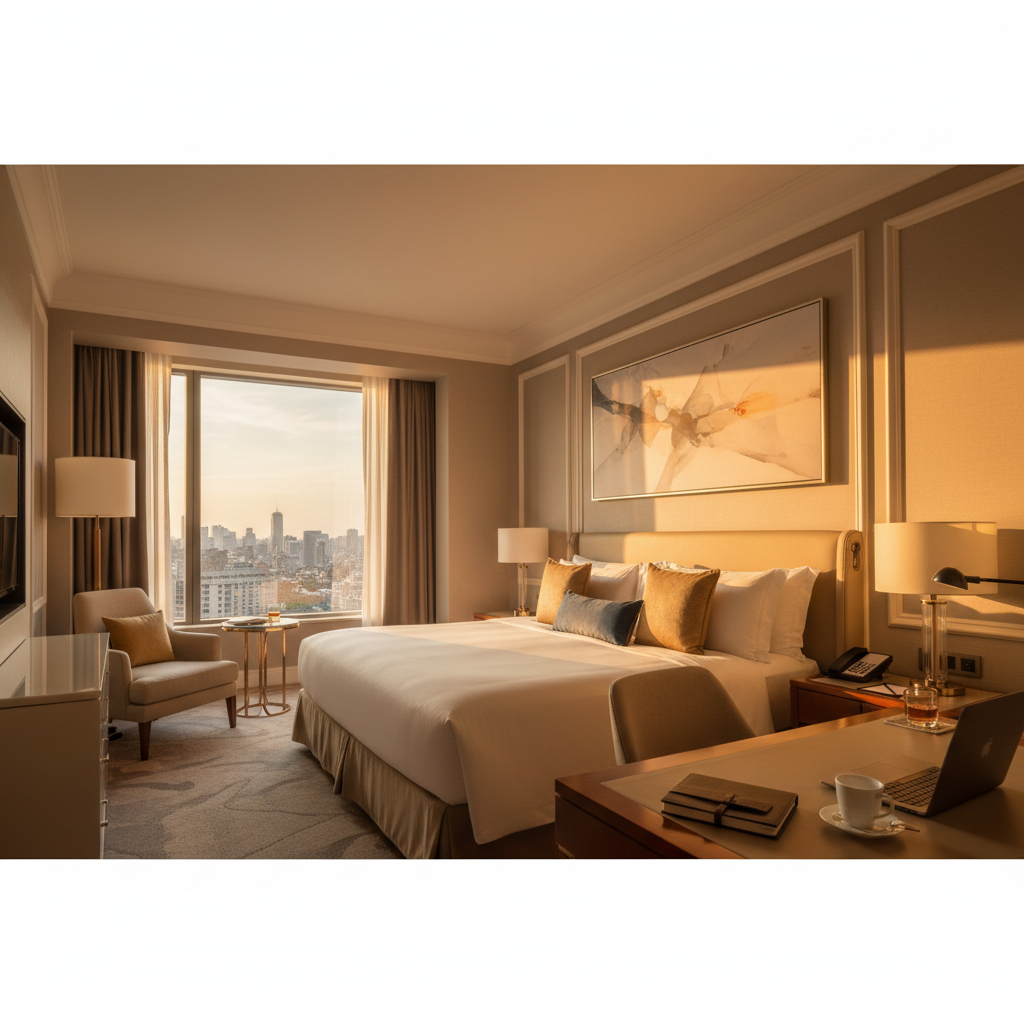
Business Travel: How to Cut Your Hotel Budget by 40%
In today's business environment, cost optimisation is key to sustainability and growth. While essential, business travel can represent a significant expenditure, with accommodation often being one of the largest components of the budget. Reducing hotel costs by 40% is not only possible but an achievable goal with the right strategies and tools.
This article will explore how companies and individual travellers can achieve substantial savings on their hotel stays, transforming business travel into a more efficient investment. From smart planning to expert negotiation and the use of advanced platforms, we will guide you on a path to maximise every pound spent on accommodation.
1. Early Planning: Your Best Ally for Savings
Advance planning is one of the most effective and undervalued strategies for significantly reducing accommodation costs on business trips. Acting proactively allows you to access better rates and greater availability, which directly translates into savings.
Booking hotels several weeks or even months in advance can offer a considerable financial advantage. Last-minute rates are often higher due to low availability and urgency, while early bookings frequently include early bird discounts. This proactive approach alone can generate savings of between 15% and 25%.
1.1. Advantages of Early Booking
Early booking not only guarantees lower prices but also ensures availability at preferred hotels, especially in popular destinations or during major events. This is crucial for business travellers who often require specific locations or particular features in their accommodation.
By booking in advance, you avoid having to settle for suboptimal or more expensive options when demand is high. Furthermore, many platforms offer free cancellation options for early bookings, which adds flexibility in case of itinerary changes. You can Search for a hotel and filter by free cancellation to see these options.
1.2. Analysing Price Trends by Destination
Understanding hotel price trends in key destinations is fundamental for effective planning. Rates vary by season, local events, and general demand. Data analysis tools and the experience of a travel team can identify the most economical periods to visit a city.
For example, a trip to Hotels in Marrakech outside of the high tourist season or during a specific event can result in significantly lower rates. Understanding these patterns allows companies to schedule their business trips during lower-cost periods without compromising accommodation quality.
1.3. Flexibility in Dates and Locations
If the business trip allows, having flexibility in travel dates or even in the location within a city can unlock significant savings. Travelling on less busy weekdays (Tuesday, Wednesday) or avoiding peak tourist times can reduce prices.
Similarly, considering hotels slightly outside the city centre but well-connected by public transport can offer much more attractive rates. Often, a small adjustment in location can lead to big savings without sacrificing convenience or access to meetings. For examples, check out Last-Minute Bargains: Where to Find the Best Hotels?.
2. Negotiation and Corporate Agreements
Companies with a significant volume of business travel have a distinct advantage: negotiating power. Establishing corporate agreements directly with hotels or through specialised platforms can generate substantial discounts and additional benefits, proactively optimising the budget.
These agreements are based on booking volume and loyalty, offering preferential rates that are not available to the general public. Good negotiation can reduce accommodation costs by an additional 10% to 30% over standard rates, depending on the volume and duration of the contract.
2.1. Direct Agreements with Hotel Chains
For companies that frequently travel to specific destinations or repeatedly use the same hotel chains, negotiating direct agreements is a smart strategy. These agreements can include fixed annual rates, volume discounts, or benefits such as free room upgrades, executive lounge access, or included breakfast.
The key is to consolidate the entire company's hotel spend and present it as an attractive package to the hotel. A good agreement can ensure consistency in accommodation quality and predictability in expenses, in addition to direct monetary savings.
2.2. Use of Consolidators and B2B Platforms
If the travel volume does not justify direct agreements with chains, or if destinations are very varied, hotel consolidators and B2B (Business-to-Business) platforms are an excellent alternative. These platforms aggregate the purchasing power of multiple companies, securing negotiated rates with a vast network of hotels.
By using these services, companies can access corporate rates without the need for individual negotiation, saving time and money. Resapass, with its 2 million bookable hotels worldwide, acts as a powerful consolidator, offering access to a wide variety of competitive options for business travel.
2.3. Cancellation Terms and Flexibility in Agreements
When negotiating agreements, it is crucial to pay attention to cancellation and modification policies. Business trips are subject to unexpected changes, so having flexible conditions is vital to avoid additional charges. Many corporate agreements include more lenient cancellation policies than public rates.
Prioritising hotels that offer free cancellation on most rooms is a smart practice. This provides a safety net, allowing adjustments to bookings without penalty if plans change, which in turn translates into significant long-term savings. Our platform always clearly indicates free cancellation options, providing peace of mind for business travellers.
3. Smart Choice of Accommodation and Services
The decision of where to stay and what services to include can have a massive impact on the final cost of a business trip. A smart choice does not always mean opting for the cheapest, but rather for the most cost-efficient in terms of value for money, avoiding unnecessary expenses and maximising value.
Carefully evaluating the traveller's actual needs and the purpose of the trip allows for the selection of accommodations that meet requirements without exceeding the budget. This strategy can generate additional savings of 10% to 20% by avoiding superfluous extras.
3.1. Types of Hotels: Beyond the Stars
Not all business trips require a five-star luxury hotel. Considering options such as boutique hotels, apart-hotels, or even well-rated mid-range accommodations can be more appropriate and economical. Apart-hotels, for example, often offer kitchens, allowing savings on meals out.
It is important to evaluate what is truly necessary for the traveller: a central but compact location in Hotels in Amsterdam? Or perhaps an executive suite with meeting space? Adjusting the type of hotel to the specific need of the trip is a direct way to control spending.
3.2. Do You Need Included Breakfast, Wi-Fi, or Gym?
Many hotels offer rates with included breakfast, premium Wi-Fi, or access to facilities such as a gym or pool. Before opting for these packages, it is essential to evaluate whether these services will actually be used. Sometimes, paying separately for a cup of coffee and a croissant at a local café is cheaper than an expensive hotel breakfast.
Similarly, checking whether free Wi-Fi is already included in the standard rate can avoid additional costs. By breaking down services and choosing only those that are essential, hidden costs can be avoided and the budget optimised. Resapass clearly shows what each rate includes, with no hidden fees and tax-inclusive prices.
3.3. Location and Access to Public Transport
The hotel's location is critical not only for convenience but also for cost. A slightly cheaper hotel located away from the meeting venue or main transport links can end up being more expensive in the long run due to taxi fares or lost time. Choosing a hotel well-connected by public transport reduces local transportation expenses.
Researching the destination's transport network is key. A hotel two metro stops from the centre can be significantly more economical than one in the same central square, offering excellent value for money. For example, when searching for Hotels in Rome, considering hotels near metro stations can be a smart strategy.
4. Leveraging the Advantages of Online Booking Platforms
Online booking platforms have revolutionised how business trips are planned and executed, offering unprecedented transparency and a range of options. Using them strategically is fundamental to achieving the greatest savings and optimising the booking experience.
These platforms consolidate a vast number of hotels and rates, allowing for quick comparisons and access to exclusive offers. The efficient use of these tools can be the difference between paying a standard rate and accessing a significant discount, contributing to that 40% saving.
4.1. Price and Option Comparison
The main advantage of online platforms is their ability to compare hundreds of hotel options in seconds. This allows business travellers to identify the best value for money for their specific needs, filtering by location, services, room type, and, of course, price.
Platforms like Resapass, with its 2 million hotels available globally, facilitate this large-scale comparison, ensuring that the most competitive rates and options best suited to the corporate traveller's profile are always found. Price transparency, with taxes included and no hidden fees, is a fundamental pillar of our service.
4.2. Price Alerts and Offers
Many platforms offer the option to set up price alerts for specific hotels or destinations. This is invaluable for advance planning, as it notifies the traveller when rates drop or when special offers arise for desired dates. Activating these notifications allows you to capture the best prices at the opportune moment.
Staying informed about flash sales or limited-time promotions can mean considerable savings, often an additional 10% to 20%. It is a passive but very effective strategy to ensure that the best savings opportunities are not missed.
4.3. Loyalty and Rewards Programmes
Although this article focuses on general strategies, it is relevant to mention that many booking platforms and hotel chains offer loyalty programmes. Accumulating points for each stay can translate into free nights, room upgrades, or future discounts. For frequent travellers, these programmes can generate long-term savings.
Centralising bookings through a single platform or chain when possible can accelerate point accumulation. However, the best available rate should always be prioritised, even if it means varying the hotel or booking platform.
5. Efficient Travel Management and Internal Policies
Well-defined corporate travel policy and efficient expense management are crucial components for controlling the hotel budget. Without clear guidelines, travellers may make decisions that unnecessarily increase costs. Proactive management can generate significant savings.
Setting reasonable spending limits, encouraging adherence to policies, and educating employees on best booking practices can lead to a 5% to 15% reduction in the overall accommodation budget.
5.1. Establishing Clear Corporate Travel Policies
A detailed corporate travel policy should specify per-night hotel spending limits, permitted accommodation classes (e.g., 3 or 4 stars), and guidelines on when and how to book. It should also address the use of preferred booking platforms and cancellation policies.
Clarity in these policies avoids ambiguity and empowers employees to make informed and economical decisions. It is essential to communicate these policies effectively and ensure that all business travellers understand and follow them. You can find more information in Your Ultimate Guide to Choosing the Perfect Hotel Abroad.
5.2. Expense Management and Reporting Tools
Implementing automated expense management tools simplifies the reporting process for travellers and provides the company with a clear view of where money is being spent. These tools can directly integrate hotel bookings and associated expenses, making it easier to track and identify areas for improvement.
Real-time visibility into travel expenses allows managers to make quick decisions and adjust strategies if necessary. The ability to analyse spending data helps refine travel policies and negotiate better agreements in the future.
5.3. Encouraging Booking Through Preferred Channels
When a company has corporate agreements or uses specific booking platforms that offer advantageous rates, it is essential to encourage employees to make their bookings through those channels. This ensures the company fully leverages its negotiated discounts.
Providing clear instructions and easy access to preferred booking channels is key. This not only saves money but also centralises travel data, facilitating management and policy compliance tracking. Don't forget that you can Search for a hotel directly on Resapass for your next trips.
6. Additional Strategies and Practical Tips
Beyond planning and negotiation, there are various tactics and practical tips that can complement the main strategies to maximise savings on the hotel budget for business travel. Every small cost reduction adds up, bringing you closer to the 40% saving goal.
From considering longer stays to utilising customer support services, these additional practices can make a significant difference in the final cost of accommodation.
6.1. Consider Longer Stays for Discounts
Many hotels offer reduced rates for longer stays, often starting from three or five nights. If the purpose of the business trip allows, consolidating multiple meetings or tasks into a single, longer trip instead of several short trips can result in substantial per-night savings.
This strategy is particularly effective in cities like Hotels in Lisbon where per-night rates can vary, and extended stay discounts are common. Additionally, it reduces travel time and costs associated with commuting between destinations.
6.2. Customer Support as a Strategic Ally
Do not underestimate the power of good customer service. If problems arise with a booking or you need to adjust a stay, a dedicated customer support team can help you find solutions, from alternative rates to cost-free booking modifications. Good support can prevent unexpected costs.
At Resapass, we offer 7/7 customer support, meaning there is always a team available to assist with any query or issue, ensuring your business trips run smoothly and optimising any savings opportunities or problem-solving.
6.3. Staying Informed About the Market
The hotel market is dynamic, with prices and offers constantly changing. Staying informed about new hotel openings, seasonal promotions, or events that may affect demand in a specific destination is crucial. Subscribing to newsletters or following corporate travel blogs can provide valuable insights.
Being aware of market trends allows companies and travellers to make proactive decisions and take advantage of the best savings opportunities as they arise. For more ideas, visit All Articles.
Conclusion: The Path to 40% Savings
Reducing the hotel budget for business travel by 40% is an ambitious but entirely achievable goal. It requires a combination of smart planning, strategic negotiation, informed choices, and the effective use of available tools.
From early booking and seeking corporate agreements to consciously selecting accommodation types and leveraging online platforms, every strategy contributes to cost optimisation. By consistently implementing these practices, companies will not only see a significant reduction in their accommodation expenses but also improve the overall efficiency of their corporate travel. At Resapass, we are committed to helping you achieve these savings, offering a vast selection of 2 million hotels, free cancellation on most rooms, 7/7 customer support, no hidden fees, and secure payment, with no subscription required.
FAQ: Frequently Asked Questions about Saving on Hotels for Business Travel
Is it really possible to save 40% on hotels for business travel?
Yes, it is possible. By combining strategies such as early booking (15-25% savings), corporate agreements (10-30%), smart accommodation choices (10-20%), and efficient use of booking platforms, cumulative savings of up to 40% or more can be achieved.
What are the most effective tools for comparing hotel prices?
Online booking platforms like Resapass are the most effective. They allow you to compare prices from millions of hotels in seconds, apply filters to find specific options, and access competitive rates, as well as clearly see if the price includes taxes and if there are any hidden fees.
What should I look for in a cancellation policy when booking for business?
It is essential to look for free cancellation options or those with very flexible conditions. Business trips can change unexpectedly, and a free cancellation policy on most rooms allows you to modify or cancel bookings without penalty, which avoids unexpected costs.
How can flexibility in travel dates help save money?
Travelling on less busy weekdays (e.g., Tuesday or Wednesday) or outside a destination's high tourist season can result in significantly lower hotel rates. Sometimes, a small adjustment to the calendar can generate considerable savings.
Are lower-category hotels always the best option for saving?
Not necessarily. The best option is one that offers the best value for money for the specific needs of the trip. A well-located mid-range hotel with essential services can be more efficient than a lower-category one in a remote location that requires additional transportation expenses.
How important is customer support in saving money for business travel?
Customer support is crucial. Good service, available 7/7 as at Resapass, can help you resolve issues quickly, adjust bookings, or find alternatives in case of unforeseen circumstances, which can prevent additional expenses or losses from unused bookings.