
Business Travel: Reduce Hotel Budgets by up to 40%
Discover proven strategies to optimise accommodation spending during your business trips, saving up to 40% without sacrificing comfort.
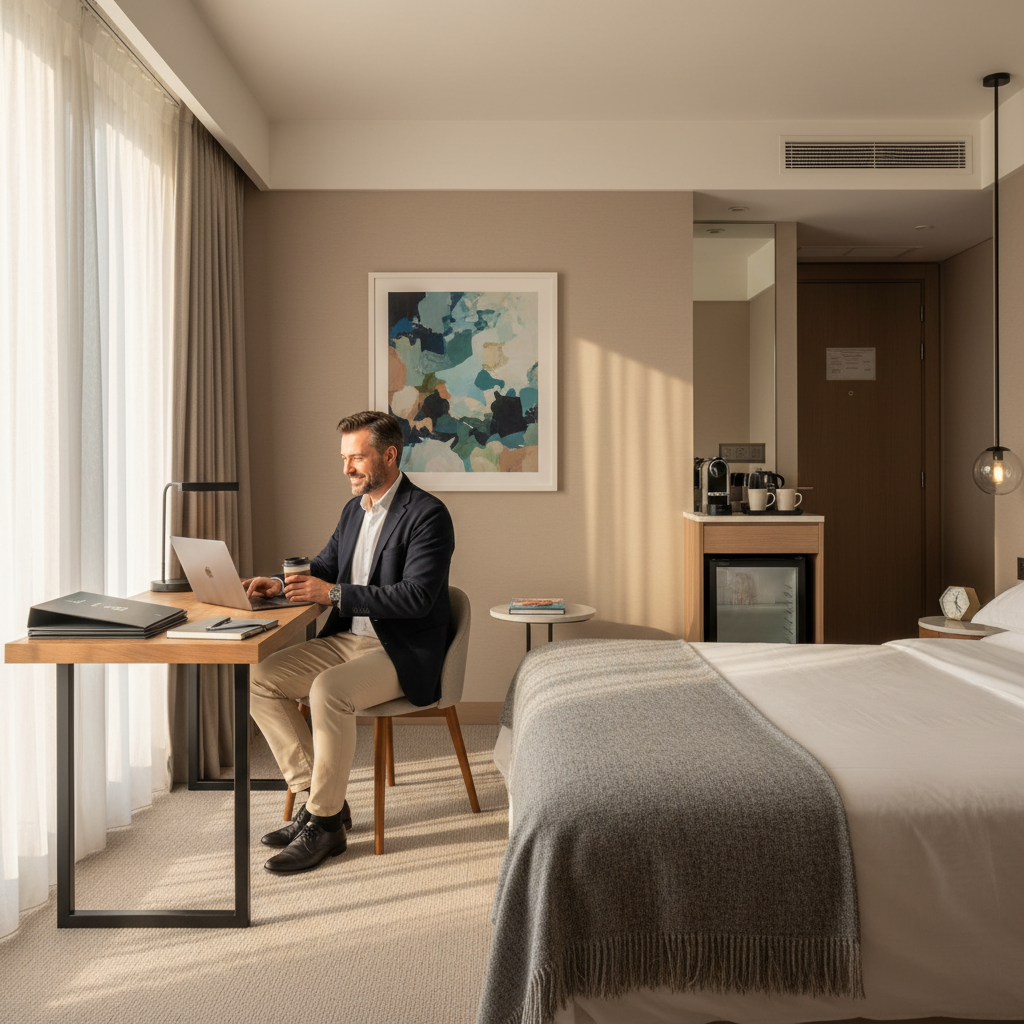
Business travel is an essential investment for the growth of many companies. However, accommodation can consume a significant portion of the budget. Reducing hotel costs by up to 40% is entirely possible if smart strategies are adopted and the right tools are used. This comprehensive guide will show you how to optimise every aspect of your business travel hotel booking.
The Importance of a Clear Strategy in Business Travel
A well-defined business travel strategy is crucial for controlling expenses and ensuring efficiency. Establishing clear guidelines not only helps save money but also enhances the traveller's experience, allowing them to focus on their professional objectives.
Establish Clear and Flexible Travel Policies
Travel policies should be the cornerstone of your savings strategy. Define spending limits per night, acceptable hotel categories, and approval processes for each trip. At the same time, allow for some flexibility to adapt to specific situations or employee well-being needs. For example, a policy might specify choosing 3 or 4-star hotels, with a budget of up to €150 per night in major European cities, but allowing justified exceptions for key projects or extended stays.
Negotiate with Hotels and Suppliers
If your company undertakes a significant volume of travel to the same destination or with the same hotel chain, negotiate corporate rates. Many hotels offer significant discounts, sometimes 15% to 25% or more, in exchange for a volume commitment. Also, consider additional service providers such as ground transportation for package savings. Don't hesitate to look for alternatives at different times of the year; demand varies greatly, and prices can change by up to 30% between high and low seasons at the same establishment.
Travel Management Tools to Optimise Spending
Travel management platforms centralise bookings, expenses, and reports, offering a complete overview of spending. These tools automatically apply travel policies, identify savings opportunities, and generate detailed reports for future negotiations. A good system can reduce the time spent on booking management by up to 50% and provide superior cost control. These platforms often integrate with booking engines like Resapass, where you can Search for a hotel among 2 million options.
Early Planning and Date Flexibility
Advance planning and adaptability are your greatest allies in reducing hotel costs. Booking early and considering alternative dates can generate substantial savings without compromising travel quality.
Book in Advance: Key to Savings
Booking weeks or months in advance is one of the most effective strategies. Hotel prices tend to rise as the stay date approaches, especially in popular destinations or during major events. A booking 30-60 days in advance can mean a 10% to 20% saving compared to a last-minute booking. For business trips to cities like Hotels in Madrid or Hotels in Amsterdam, this practice is fundamental. "Advance purchase" rates often come with better conditions.
Avoid Peak Seasons and Special Events
Whenever possible, avoid travelling during peak season or on dates coinciding with large conferences, trade fairs, or sporting events. Hotel prices can double, or even triple, at these times. Prior research into local event calendars can save you 30% or more on accommodation. If your destination is, for example, Hotels in Tokyo, knowing the dates of major events can be a big differentiator for your budget.
Flexibility in Travel Dates
If your schedule allows, being flexible with check-in and check-out dates can generate significant savings. Often, Sunday to Thursday nights are more economical than Friday and Saturday nights. Extending or shortening a stay by one day could reduce the total accommodation cost by 5% to 15%. Considering travel at the beginning or end of the week is a simple yet very effective tactic.
Smart Accommodation and Location Selection
The choice of accommodation type and its location are decisive for the final budget. The most central or highest-category hotel is not always the best option for a business trip.
Consider Alternatives to Traditional Hotels
Serviced apartments, apart-hotels, or even longer stays in properties with kitchens, can be much more economical for trips lasting more than three or four nights. This not only reduces the cost per night but also allows for savings on meals, as you can cook. For a week-long stay, savings can exceed 25% compared to a standard hotel, in addition to offering a more local and comfortable experience. Platforms like Resapass offer a wide variety of accommodations, not just traditional hotels, allowing you to choose the option that best suits your budget and needs.
Strategic Locations Outside the City Centre
A hotel a little further from the city centre, but well-connected by public transport, can offer significantly lower rates. A saving of 15% to 20% is common. Calculate the time and cost of travel to ensure the option is truly advantageous. Sometimes, a few extra minutes on public transport can mean significant savings without losing efficiency. For example, for a business trip to a city like Hotels in Rome, a hotel in a quiet neighbourhood with good metro connections can be ideal.
Evaluate the Value of Included Services
Before booking, carefully evaluate which services are included in the rate. A slightly more expensive hotel that includes breakfast, high-speed Wi-Fi, gym access, or airport transfer, can be more economical in the long run than an seemingly cheap option that charges extra for each of these essential services for a business traveller. A good analysis can reveal indirect savings of up to 10-15% of the total trip cost.
Maximise Benefits and Discounts
Leveraging loyalty programmes, special offers, and smart booking tools can make a big difference to your business travel budget.
Loyalty and Corporate Loyalty Programmes
Enrol your company in hotel chain loyalty programmes. Accumulated points can be redeemed for free nights, upgrades, or discounts on future bookings. Some chains offer specific programmes for businesses that reward booking volume. Strategic use of these programmes can reduce direct accommodation spending by 5-10% in the long term. Additionally, individual business travellers can also accumulate points, benefiting both the company and themselves.
Special Offers and Promotions
Keep an eye out for special offers and promotions. Many booking platforms and hotels launch seasonal discounts, flash sales, or packages for extended stays. Subscribing to newsletters or using search engines like Resapass will allow you to stay informed about these opportunities. At Resapass, for example, we offer 2 million bookable hotels worldwide, increasing the likelihood of finding a deal. It's common to find promotions offering 20-30% off the standard rate.
Use Smart Booking Platforms
Use platforms like Resapass that offer extensive options and clear conditions. With Resapass, you have access to 2 million hotels, and most rooms offer free cancellation, which is invaluable for flexibility in business travel. Furthermore, there are no hidden fees, prices include taxes, and secure payment is guaranteed. Our customer support is available 7/7 for any eventuality, ensuring your experience is smooth and stress-free. You can Search for a hotel with confidence, knowing you have support.
Post-Trip Control and Continuous Optimisation
The savings process doesn't end with booking or the stay. Analysing post-trip expenses and adjusting strategies for future travel is crucial for long-term optimisation.
Audit and Analysis of Travel Expenses
After each trip, conduct a detailed audit of expenses. Compare actual costs with the estimated budget and travel policies. Identify deviations and analyse their causes. This analysis can reveal spending patterns and areas where improvements can be implemented. Effective analysis can lead to adjustments that result in an additional 5% to 10% saving on future trips.
Traveller Feedback and Policy Adjustments
Collect feedback from travelling employees. Their direct experience is invaluable for understanding which policies work well and which need adjustment. A traveller who feels uncomfortable or unproductive in a type of accommodation may cost the company more in the long run than the initial saving on the hotel. Employee satisfaction is key to retention and productivity, so adjusting policies based on their feedback can improve overall efficiency. For example, if a trip to Hotels in Bali receives feedback about difficulty getting around from the location, the policy could be adjusted for future bookings.
Implementation of Technology for Automation
Automation applies not only to the initial booking but also to expense tracking and report generation. Integrating booking systems with expense management software simplifies the entire process, minimising errors and freeing up administrative staff time. Tools that automate expense validation according to pre-established policies can reduce manual effort by up to 70% and ensure regulatory compliance. For more tips on choosing the perfect hotel, you can consult Your Ultimate Guide to Choosing the Perfect Hotel Abroad.
Additional Tips for Maximum Savings
To take your savings to the next level, there are a number of additional tactics that can complement the main strategies. Every small optimisation adds up to significant savings.
Use Free Nights or Personal Loyalty Points
Many business travellers accumulate points in personal loyalty programmes. If company policy allows, using these points for free nights instead of paying with the company budget can be a mutual advantage. It's a way to complement travel policy and reduce corporate spending at no cost to the traveller. Ensure that company policies authorise this and that it is managed transparently.
Consider Hotels with Shared Services or Co-working
Some hotels are innovating with integrated co-working spaces or shared services that can reduce the cost of temporary offices or meeting rooms. If your business trip involves frequent meetings outside the hotel or if you need a productive workspace, seeking this type of accommodation can generate additional savings. In addition, hotels with "happy hours" or extended breakfasts can reduce food and beverage expenses.
Constant Review of Suppliers and Rates
The hotel market is dynamic. Rates and conditions constantly change. Periodically review your preferred suppliers and compare their offers with those of new competitors or emerging platforms. What was the best deal last year might not be today. Constant monitoring can uncover new savings opportunities of up to 10-15% annually. Stay informed by reading relevant articles in All articles on our blog.
Opt for Free Cancellation Whenever Possible
In an often-changing business environment, free cancellation is a lifeline. Although rates with free cancellation are sometimes slightly higher, the flexibility they offer is invaluable. The ability to change or cancel a booking without penalty avoids unexpected costs if travel plans change. At Resapass, most of our rooms offer free cancellation, giving you the peace of mind of knowing you won't incur charges for last-minute changes.
Conclusion: 40% Savings is a Reality with Planning
Reducing the hotel budget for business travel by up to 40% is not a pipe dream, but the result of meticulous planning and the implementation of smart strategies. From advance booking and date flexibility, to astute accommodation selection and leveraging management tools, every step counts. By adopting these tips and using reliable platforms like Resapass, you will not only optimise your expenses but also enhance your travellers' overall experience. Start transforming how your company manages business travel today and watch your savings multiply.
Frequently Asked Questions (FAQ)
Is it really possible to reduce the hotel budget by 40%?
Yes, it is possible. By combining various strategies such as advance booking, date flexibility, the use of smart platforms, corporate negotiation, and the selection of strategic locations, significant savings that reach or exceed 40% of the original budget can be achieved.
What tools help me better manage business travel?
Corporate travel management tools and booking platforms like Resapass are essential. They allow you to centralise bookings, automatically apply travel policies, track expenses, and access a wide inventory of hotels with competitive conditions and services such as free cancellation and 7/7 customer support.
Is it always better to book well in advance?
Generally, yes. Booking 30 to 60 days in advance can offer significantly better rates and greater availability of options, especially in popular destinations or during periods of high demand. However, occasionally, last-minute deals may arise, but it is less reliable for business travel.
What advantages does Resapass offer for business travel?
Resapass offers access to 2 million hotels worldwide, most with free cancellation, 7/7 customer support, prices without hidden fees including taxes, and a secure payment process. This ensures flexibility, transparency, and constant support for business travellers.
Should I prioritise location or price when choosing a hotel?
It depends on the travel priorities. If time is critical and proximity to meetings is key, a central location may justify a higher price. However, a hotel well-connected by public transport, though a little further away, can offer considerable savings without sacrificing efficiency, making it a balanced option.